
Fujitsu Cyber - Threat Intelligence Reports
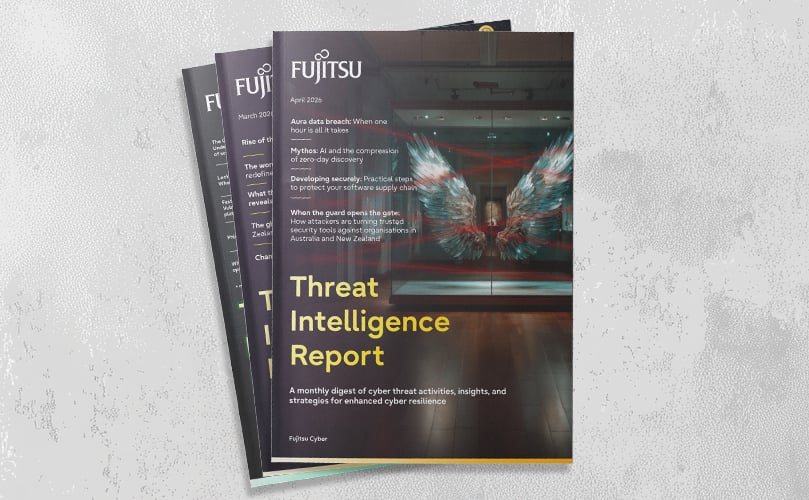
Our Threat Intelligence Reports offer a practical, regional view of the cyber threats affecting organisations across Australia and New Zealand. Built on real‑world activity observed by our teams and shaped by hands‑on experience across consulting, threat hunting and managed services, each monthly report provides clear, actionable guidance to help improve cyber resilience.
The September Threat Intelligence Report examines the growing cyber risks surrounding trust, governance, identity and emerging technologies. We explore the alleged TeamPCP supply chain compromise and its implications for third-party risk, the governance challenges of agentic AI, the large-scale exposure of identity verification data, and the rise of passkey-themed social engineering attacks targeting cloud identities.

This Threat Intelligence report examines how cyber security boundaries are being tested across enterprise systems, critical infrastructure and emerging technologies. From authentication bypass vulnerabilities and unintended AI access to real-world environments, to new ASD guidance and Australia's Cyber Security Strategy Horizon 2, the report highlights the importance of strong access controls, resilience and governance.

Our July Threat Intelligence report explores emerging cyber risks, from trust-based macOS malware and AI-powered development tools to the challenges of implementing Zero Trust. It also examines the evolving Essential Eight framework and what organisations can do to build long-term cyber resilience beyond compliance.

From attackers increasingly relying on users to execute malicious actions themselves, to the growing urgency of preparing for quantum-era threats. AI features prominently throughout this edition, from new governance requirements under the latest ISM update to a Five Eyes warning that AI is accelerating cyber threats faster than many organisations are prepared for.

This report highlights a growing convergence of speed, visibility gaps, and AI-driven capability. From publicly released zero-day exploits to everyday use of generative AI tools. We also cover a newly discovered vulnerability (CVE‑2026‑40927) by one of our senior technical testers, which shows why client-side controls alone can create a false sense of security.

In this edition, we explore how the Aura data breach shows that just one hour of legitimate access can be enough to expose hundreds of thousands of records. How AI‑driven vulnerability discovery, highlighted by Mythos and Project Glasswing, is compressing the zero‑day window. Practical, framework‑aligned steps that dev teams can take to strengthen supply‑chain security.

This report looks at how AI is reshaping cyber risk, from new malware techniques designed to evade modern security tools, to AI‑driven attacks that target trust, language and identity rather than traditional software flaws.

This month highlights how modern cyber threats succeed through scale, visibility gaps and misplaced trust - spanning software supply‑chain compromise, industrialised botnets, detection blind spots, OSINT exposure, and the operational risks organisations create when they lack clear visibility of their environments.

January’s report examines how identity‑driven attacks, third‑party exposure and emerging infrastructure abuse are shaping today’s threat landscape, from state‑sponsored activity and significant New Zealand breaches, to metadata leaks, crypto‑enabled command‑and‑control and the human factors that turn incidents into large‑scale events.

Bringing together the most significant threat insights of the year, this edition shows how trust, identity and scale were exploited throughout 2025, from ransomware and supply‑chain compromise to cloud credential theft, AI‑enabled attacks, operational technology risk and the growing abuse of legitimate platforms and services.

This edition explores how attackers are abusing trusted infrastructure and common development practices, from dead‑drop command‑and‑control techniques and changes to the OWASP Top 10, to a critical WSUS vulnerability that demonstrates how “safe” systems can quickly become points of failure.
