Fujitsu's Commitment to Supply Chain SustainabilityAchieving Net-Zero
Article | 2025-11-12

10 minute read
Net positive is a concept that aims not only to reduce the "Negative impact" of business activities but also to proactively create "Positive impact" for society and the environment. Fujitsu's Net Positive Index indicates that companies embracing this approach tend to have higher profits and gain investor trust. As part of its initiatives, Fujitsu is working towards achieving net-zero GHG emissions across its entire value chain, advancing efforts that utilize data and technology, such as GHG emissions visualization.
According to a Fujitsu’s Net Positive Index, independently researched and developed by Economist Impact, companies with mature Net Positive initiatives, regardless of industry, tended to be more likely to achieve their revenue and market share goals, and consistently gained investor trust. For businesses, the pursuit of Net Positive offers benefits for both business growth and social/environmental aspects. However, the Index revealed that despite many corporate executives and decision-makers understanding these dual benefits, they face challenges in implementing Net Positive strategies.
Achieving net-zero requires more than internal change. It demands shared values and close collaboration across the entire value chain, from suppliers to partners.
Fujitsu has tackled this challenge head-on.
For example, in the Partnership for Carbon Transparency (PACT) program hosted by the World Business Council for Sustainable Development (WBCSD), Fujitsu achieved the world's first successful social implementation of inter-company data sharing for product carbon footprints using primary supplier data in 2023, aiming to visualize GHG (greenhouse gas) emissions across the entire value chain. We currently share GHG emissions data with 19 suppliers and are expanding this initiative. As certified by the Science Based Targets initiative (SBTi), we aim to achieve net-zero across our entire value chain by 2040. Through PACT's rule-making and participation in its Social Implementation Program, we drive transformation through internal and external collaboration, accelerating industry-wide decarbonization to create societal impact.
Beyond environmental impact, Fujitsu is using external collaboration to strengthen risk management to address a range of supply chain risks, including natural disasters, information security, financial stability, and compliance. Internally, Fujitsu developed Third Party Risk Management (TPRM) to centrally monitor and analyse risks from suppliers and partners, as well as external factors such as geopolitical issues, regulations, and tariffs.
In this article, Takashi Yamanishi, Fujitsu’s CSSO discusses the background and achievements of Fujitsu's supply chain sustainability efforts.
Challenges in ESG Data Sharing Between Companies
―― When did Fujitsu begin its commitment to sustainability?
The Fujitsu Group has long established sustainability targets and promoted social impact global activities. Fujitsu’s net zero targets are validated by SBTi (Science Based Targets initiative) ensuring they are consistent with global warming scenarios.
Driven by a strong social responsibility, in 2023 Fujitsu accelerated its environmental goals, aiming for zero greenhouse gas emissions across its global value chain by 2040.
‘We have fully commenced our efforts to promote supply chain sustainability, and in April 2024, we established the CSSO (Chief Sustainability & Supply Chain Officer) position to further accelerate these initiatives.’
In the Mid-Term Management Plan announced in fiscal year 2023, we newly defined "Materiality in Management," which more strongly reflects the perspective of "providing value to customers and society." ,
Currently, we are enhancing our internal systems and strengthening collaboration with business partners, focusing on three pillars: preventing and mitigating human rights risks, addressing environmental aspects such as GHG emission reduction, and ensuring diversity.
──You successfully achieved data integration and visualization of GHG emissions across the entire supply chain. What challenges and difficulties did you encounter in driving this initiative, and how did you resolve them?
Following the press release on data collaboration with suppliers last year, we aimed to collaborate with approximately 20 additional companies. As of October 2025, we have successfully integrated ESG (Environmental, Social, and Governance) data with 19 suppliers.
This initiative enables the visualization of the effectiveness of suppliers' GHG emission reduction measures, improves the accuracy of Scope 3 emissions calculations (GHG emissions across the entire supply chain), and allows for the tracking of emissions per unit of procured goods.
During the implementation process, we addressed concerns from suppliers, including gaining their support and alleviating worries about information leakage to competitors through data sharing. Specifically, we leveraged Uvance's offering, the "Sustainability Value Accelerator," to develop a system ensuring confidentiality, thereby establishing an environment where data can be shared with confidence. Furthermore, to meet the needs of domestic suppliers, we enabled the use of both the global methodology (WBCSD PACT) and the domestic methodology (Green x Digital Consortium).
To gain supplier consensus, we held one-on-one dialogues with each company, confirming their understanding of emissions, assessing the feasibility of collecting data from upstream suppliers, and clearly communicating the importance of the initiative.
Collaboration with peers and other ecosystem players is crucial to Fujitsu’s sustainability goals. We addressed compliance with both international and domestic standards by developing an integration method and ensuring interoperability that aligns with both. As the lead of the Data Visualization Project within the Green x Digital Consortium, a coalition of Japanese businesses focused on accelerating decarbonization, Fujitsu successfully facilitated the adoption of a standard tailored to the Japanese context, bridging the differing methodologies and specifications of the domestic Green x Digital Consortium standards and the international PACT standards. This resulted in the creation of an environment that facilitates data collaboration, leading over 130 businesses to recognize and prioritize PCF(Product Carbon Footprint)s in their strategies.
These achievements represent a crucial step towards Fujitsu's own carbon neutrality goals and the provision of sustainable offerings. Moving forward, we will accelerate our efforts by collaborating with an increasing number of domestic and international partners, creating reduction simulations and case studies, to achieve net-zero by 2040.

── Please tell us about the internal implementation of partner risk management in the supply chain using Third Party Risk Management, or TPRM. What challenges and difficulties did you encounter in promoting this initiative?
While solutions for visualizing supply chain risks, such as cybersecurity, ESG, compliance, and natural disasters, already exist, Fujitsu is looking further ahead. We envision a strategy that goes beyond visualization, integrating internal data like sales information to assess risk priorities and using digital simulations and AI to guide optimal actions. We are actively working to turn this vision into reality.
Initially, implementing TPRM internally faced challenges due to inconsistencies in notation, data formats, and items across systems. These issues have now been addressed through Fujitsu’s global data standardization efforts as part of its data-driven management strategy.
Although TPRM is still under development, we are confident it will play a key role in strengthening supply chain resilience and supporting long-term sustainability.

Supply Chain Sustainability as a Prerequisite for Business Growth
── How do supply chain sustainability initiatives contribute to business growth?
For us, achieving a sustainable supply chain is the fundamental pillar supporting the very sustainability of our business, which we pursue in close collaboration with all our partners and suppliers. It is, therefore, a prerequisite for business growth.
Currently, we are focusing on internal applications, integrating Uvance—Fujitsu’s own digital services solutions—within our supply chain. Through initiatives like CO2 emission visualization and TPRM, we actively engage suppliers and partners in using Uvance. Insights gained from these efforts, including both successes and challenges, are fed back into Uvance product development, enhancing the quality of Fujitsu’s offerings and creating higher value-added solutions.
These activities are jointly led by the Uvance business divisions and supply chain teams, who continuously discuss user needs and business challenges while exploring improvements through innovative technology applications. Fujitsu’s supply chain sustainability initiatives aim to create a Net Positive loop, maximizing impact and advancing sustainability for our customers and society as a whole.
── What direction is Fujitsu aiming for in terms of supply chain sustainability in the future?
We aim to achieve net-zero across our entire value chain by 2040. To reach this goal, three elements are essential for supply chain sustainability: data-driven approaches, global collaboration, and strong governance.
For greenhouse gas (GHG) emissions in the supply chain, it is critical to strengthen engagement with suppliers and partners and work together to reduce emissions. By leveraging technology, we will continue to advance initiatives that enable precise visualization of actual emissions and ensure that reduction efforts are accurately measured and reflected.
Beyond GHG emission reductions, the risks and regulations surrounding the supply chain, including information security, the impact of natural disasters, and sanction risks, are becoming increasingly complex. To address this , we aim to evolve our mechanisms to be flexible enough to continuously adapt to new risks and regulations, rather than being constrained by existing methods, and thereby build a truly sustainable and resilient supply chain.

── Finally, please provide a message for companies working towards Net Positive.
Supply chain sustainability is a common challenge faced by many companies, and at the same time, a significant opportunity for driving operational efficiency and business growth. Fujitsu realizes that close collaboration with suppliers and partners is essential for visualizing GHG emissions and managing risks.
The path to net-zero cannot be built by Fujitsu alone; collaboration with suppliers is indispensable. Early adoption can lead to competitive advantage and scaling efforts lead to greater impact.
By connecting the knowledge gained from practice and the value of Uvance to our customers and partners, and together "spinning the Net-Positive loop," we will accelerate positive transformation across society.
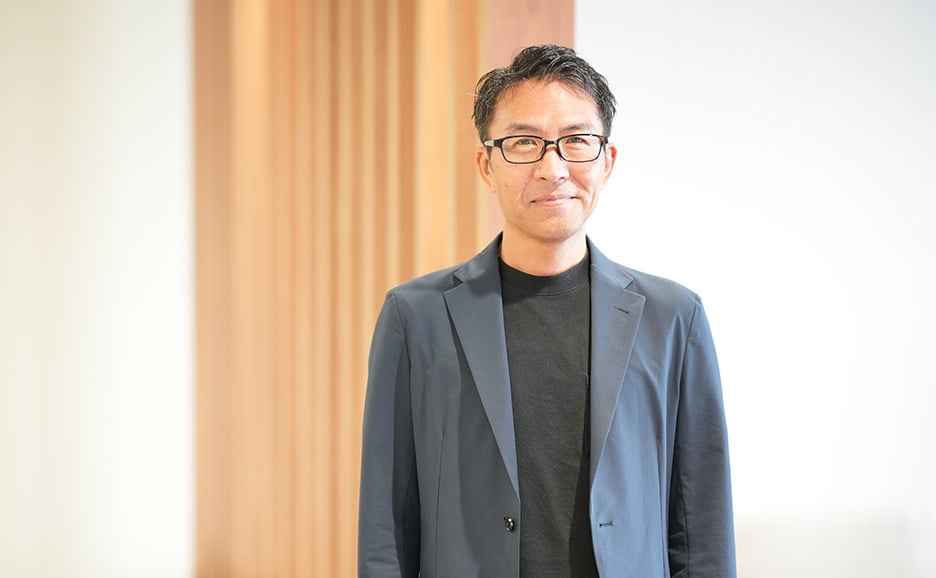
Takashi Yamanishi
EVP CSSO (Chief Sustainability & Supply Chain Officer), Fujitsu Limited
Takashi Yamanishi joined Fujitsu in 1989, with his primary focus being procurement from global vendors in areas such as software and semiconductors. He oversaw the global integration of procurement and supply chain management organizations as General Manager of the Global Supply Chain Division in 2018. Afterwards, in parallel with the shift to services within the business portfolio, he helped strengthen alliances with key partners while reforming procurement and supply chains. He assumed his current position in 2024.


Are you Net Positive ready?
Discover how your organization is advancing toward a thriving, Net Positive future.

Related Information
Advancing Net Positive - Driving Profit with Purpose

Solving societal issues or achieving business growth

Data is essential in promoting a net positive approach
