How Should Companies Prepare?2030: The Year Of Practical Quantum Computing
Article | 2026-7-1

5 minute read
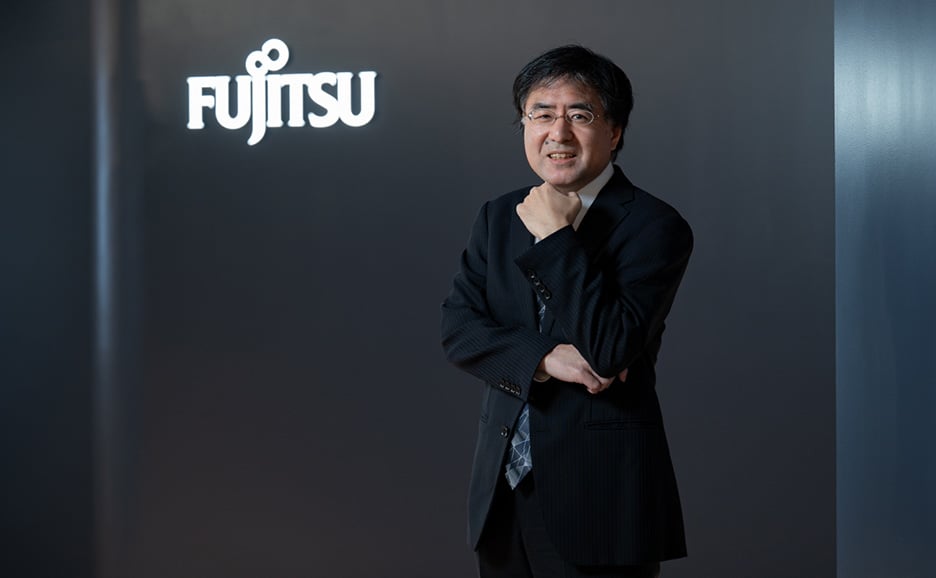
The supercomputer Fugaku was jointly developed by RIKEN and Fujitsu. Fujitsu is also one of Japan’s largest IT vendors and a leading global digital transformation (DX) partner in Japan. Fujitsu quantum researcher Shinji Kikuchi discusses the quantum computing paradigm shift expected around 2030, as well as how business leaders should approach their preparation.
Global technology company Fujitsu is leading Japan’s quantum computing revolution. It showed its high-level development skills with the supercomputer Fugaku, which is Japan’s flagship supercomputer, achieving world No.1 rankings in key global benchmarks for more than five years. With expertise in both the CPUs (central processing unit) used in supercomputers and the QPUs (quantum processing units) used in quantum computers, Fujitsu is ramping up cutting-edge projects in the quantum field. It recently worked with world-leading research institutions RIKEN in delivering a 256-qubit superconducting quantum computer. Now, it is looking to scale the technology to bring quantum computing to the mainstream by 2030.

Global Executives Shifting From Prediction To Preparation
A Fujitsu survey carried out by the Financial Times shows that 96% of global executives believe that quantum computing will deliver value to their organization, with only 20% saying it is too early to start considering the technology. The phase of predicting if quantum computing will become practical is over, and now the question is one of preparation. Even so, only 58% of companies are discussing quantum computing strategy in 2026, and many lack a clear idea of use cases, points out Shinji Kikuchi, Senior Project Director of Quantum Application Core Project in Fujitsu Research.
“If a company plans to use quantum technology, it is essential to have staff who understand it, and choosing the ideal partner is also key. With no way to know which companies will come out on top after 2030, it’s natural to struggle with investment decisions,” says Kikuchi.
So, how will Fujitsu’s approach to this cutting-edge tech affect global business strategies? As practical quantum computing grows ever more realistic, how should companies approach their preparations and priorities?

Different Roles For AI, Supercomputers And Quantum Computers
Kikuchi points out that quantum technology is not simply going to replace existing systems.
“Conventional computers calculate using binary, a system of 0s and 1s. Even AI and supercomputers are both based on that principle. However, quantum computers use 0, 1 and their superposition at the same time. For a given number of qubits, N, they can calculate 2N states in parallel with certain algorithms. In theory, computational space can expand exponentially in some situation in the future. Even all the resources of the supercomputer Fugaku together are equivalent to only about 50 qubits,” explains Kikuchi.
The unique nature of quantum computing makes it more than just an extension of conventional technology. It is a wholly new computing infrastructure that complements AI and supercomputers. As AI speeds up decision-making and supercomputers simulate phenomena, quantum computing is expected to excel at quickly finding optimal solutions among countless possibilities.
So, in concrete business terms, what might be the best way to use all that computing power?
Quantum Computing Will Change The Future Of Business. What Fields Are Best Poised?
Kikuchi gives some examples.
Kikuchi says the benefit for materials development is one of the primary targets. For example, catalysts used in car exhaust filtration currently depend on rare earth metals, so finding alternatives is an important goal, both financially and geopolitically.
“Supercomputers are excellent at simulating the characteristics of already-discovered materials. However, searching through unknown candidates at a wide scale is not so simple. Quantum computers have enormous potential for discovering materials and combinations from a wider range of investigation possibilities,” he adds.
“We also have high expectations for drug discovery, as well as use in finance. In finance, we are working with Mizuho-DL Financial Technology to develop algorithms that can be utilized for financial problems such as portfolio optimization. In a portfolio of one- or two-hundred securities, it’s simply unrealistic to evaluate risk and return for all the combinations. But using quantum technology could accelerate the evaluation of a far wider range of options.
“We are also looking into some unique applications such as robotics. If we can realize precise manipulation of robots by quantum optimization technology, it can broaden the horizon of quantum computation,” he says.
It is also important to not look at quantum computing in isolation. To leverage its true value, AI and supercomputers should also play their roles and all should be used in conjunction with software and applications.
“Quantum isn’t a silver bullet. We can already find effective solutions for current issues by linking AI and supercomputers. What businesses need is a vision of where quantum will be most useful and a strategy for gradual implementation,” Kikuchi says.
“Fujitsu is one of the few companies engaged in hardware, software and applications all in-house. We are building a structure that will offer concrete support from adoption through usage methods, including combinations with AI and supercomputers.”
The Dawn Of The Quantum Era Is Fast Approaching
Kikuchi points out that just five years ago, almost no one was talking about generative AI. This is the speed at which technology is advancing. Fujitsu’s research confirms this. About 82% of business leaders said that AI’s rapid advances over recent years have been a reality check for them on how quickly technology advancements can accelerate.
He says: “We are living in an uncertain world where no one can predict what disruptions new technology may bring. But that is exactly why leaders need the vision to identify truly impactful changes when they arrive. We believe quantum computing is no longer far-future tech. A company’s ability to embrace the paradigm shift quantum computing brings is going to determine its competitiveness. Now is the time to start preparing.”
Profile:
Shinji Kikuchi: Holder of an MS in information technologies from Nagoya University and a PhD in information science from the Japan Advanced Institute of Science and Technology. Joined Fujitsu as a researcher in 1997 and is now a manager leading the team working for quantum computer applications.
text by Ryoichi Shimizu photography by Takao Ota editing by Akio Takashiro
This article is sourced from Forbes.com BRANDVOICE | Paid Program Mar 30, 2026, 04:00am EDT
Quantum computing’s growing presence in the corporate world
Find out more in the report
