
Understanding of the Logic:Takuya Takagi’s Pursuit of Trust through Explainable AI
Interview article | 2026-11-20

10 minute read
Discovering new materials. Exploring new medical treatments. Supporting complex business decisions. AI's ability to uncover patterns and possibilities beyond human perception has advanced rapidly. Yet that does not necessarily mean we fully understand its answers. Why did it reach a particular conclusion? Why was that decision considered the best option?
If seemingly correct answers become embedded in business and societal decision-making without a clear understanding of the reasoning behind them, it becomes increasingly unclear who is accountable when problems arise. Without a clear understanding of how AI reaches its conclusions, it becomes difficult to evaluate its recommendations and determine who is responsible for the decisions based on them.
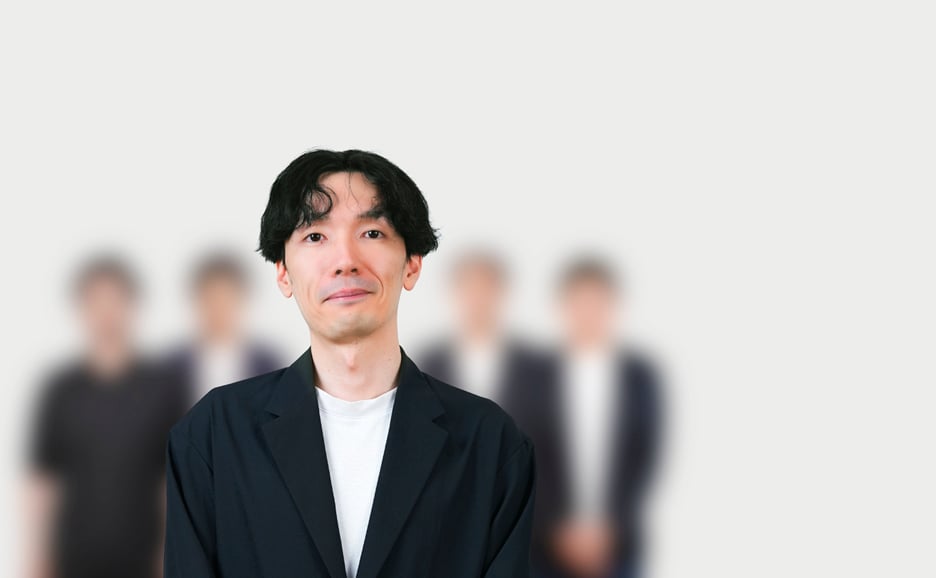
For Fujitsu AI researcher Takuya Takagi, these questions are central to his work. His goal is to help people understand and trust the reasoning behind AI's answers, enabling them to make informed decisions and take responsibility for them. The origins of this ambition can be traced back to an unexpected source: games he loved as a child.
What is Trust in AI?
Trust in AI is an approach for building confidence in AI. It is built around five key elements: Explainable, Secure & Ethical, Sovereign, Sustainable, and Connected. Together, these elements help organizations adopt AI in ways that are responsible, transparent, and aligned with human values.
In ”People Shaping the Future of AI series", we explore the personal stories, motivations, and research journeys of the people working to make trusted AI a reality. This article highlights the Trust in AI elements, showing how one's work contributes to building AI that people, organizations, and society can trust.
Understanding the Mechanics Behind Victory

Takuya was born and raised in Shiraoi, a town in southwestern Hokkaido. As an elementary school student, he became fascinated with competitive fighting games. He wanted to be a better player than his friends and the best player in his class. Naturally competitive, he spent countless hours mastering the games he loved.
He was never interested in winning by chance. He wanted to understand; how did each character behaved under different conditions? Which moves were most effective in which situations? He read strategy guidebooks cover to cover, memorizing tactics and techniques. He especially enjoyed the developer interviews included at the back of those books. Why were the rules designed that way? What challenges did the creators overcome to bring the game to life?
Simply knowing the right answer was never enough.
If opponents or circumstances changed, memorized solutions quickly lose their value. Only by understanding the underlying mechanics could he choose the best next move on his own. What excited him was not just winning but understanding the path to victory and testing that understanding for himself.
One day, Takuya was given an old personal computer from one of his relatives. He began building websites, experimenting with simple programs, and creating animations. The more he explored, the more he wanted to understand what was happening behind the scenes. The curiosity that once drove him to master fighting games gradually expanded into a passion for computers themselves.
Discovering Algorithms
Yet these models imitated things people already did well: using language, recognizing images and creating art. Aparajita is now more interested in where AI can extend human capability by finding patteAfter graduating from junior high school, Takuya chose to attend a National Institute of Technology, enrolling in its information science program. Part of the decision was practical. The school had a strong reputation for helping students find employment. Another part came from a simple desire to keep working with computers. Together, these motivations opened the door to a new world.
Soldering circuits and building electronic hardware never truly captured his attention. Instead, he was drawn to algorithms. An algorithm is a set of procedures or rules for solving problems. Consider the task of arranging a shuffled deck of cards in numerical order. One method might examine each card individually, while another might divide the cards into groups and combine them efficiently. The result is the same, but the speed and effectiveness vary depending on the approach.
"I liked the idea that a simple insight, like Columbus's egg, could solve a problem that previously seemed impossible." “Columbus’s egg” refers to a seemingly difficult problem whose solution appears obvious once someone demonstrates it.
His fascination had shifted from games to real-world problems. Encouraged by a teacher who introduced him to the possibility of transferring to a university, Takuya went on to study computer science at Hokkaido University. He continued his research on string algorithms and full-text indexing through his master's and doctoral studies.
During that time, two internships at Fujitsu proved to be a turning point. He noticed that researchers he knew at Fujitsu Laboratories continued to publish academic papers while working in industry. Fujitsu seemed to offer the ideal environment: a place where he could pursue advanced research while using his knowledge to solve real-world challenges facing society.

Understanding Cause and Effect in AI

In 2018, Takuya officially joined Fujitsu and was assigned to the Artificial Intelligence Laboratory. Unlike traditional algorithms, which encode knowledge that humans already understand, AI learns patterns directly from large volumes of data. It can sometimes outperform humans on these tasks. Yet the reasoning behind those answers often remains difficult to see. Even when it can be visualized, it has little value if people cannot understand it.
"I wanted to understand why AI makes the decisions it does."
That question quickly drew him deeper into the world of AI. Distinguishing between a cheetah and a leopard in an image may not seem like a particularly life changing. But when AI recommends medical treatment, identifies promising new materials, or influences major business decisions, the situation changes dramatically. People cannot responsibly act on those recommendations unless they can understand, trust, and explain them.
Through collaborations with researchers at Duke University and a variety of studies on explainable AI, Takuya eventually arrived at his current focus: causal AI. Imagine data showing that countries with higher chocolate consumption also produce more Nobel Prize winners. That does not mean eating chocolate leads to Nobel Prizes. Other factors, such as economic prosperity or educational opportunities, may influence both outcomes. Correlation alone does not reveal true causation.
Understanding causality allows AI to move beyond prediction. Why did something happen? What would happen if conditions changed? Which factors should be influenced to achieve a desired outcome? These questions become increasingly important in areas such as materials discovery, drug development, and robotics, where AI-generated recommendations can directly shape the real world.
By connecting causes and outcomes, causal AI enables people to understand, validate, and responsibly apply AI-driven insights. It helps create a future where technological progress and sustainable growth can advance together.
Building Trust Through Explainability
"There are two meanings to explainability," Takuya emphasizes.
The first is helping people trust decisions that have already been made. When the reasoning behind an AI-generated conclusion can be examined, AI systems become auditable. The people responsible for decisions can also take accountability with confidence.
The second is enabling future discoveries. When AI uncovers answers beyond current human understanding, revealing the causal mechanisms behind those answers transforms them into knowledge that can be applied and reproduced elsewhere. Not everyone needs to understand every AI decision in detail.
In everyday life, people use medicines without fully understanding how they work and rely on GPS systems without knowing the underlying algorithms. These technologies are trusted because society has established systems for verification and accountability.
AI should be no exception.
The goal of explaining AI is to transform AI-generated answers into knowledge that people and society can use responsibly. Only when people understand the reasoning behind decisions and can confidently act on them can AI truly become a partner in tackling the unknown.
As AI becomes more widely used, ensuring that people can evaluate its recommendations and remain responsible for their decisions becomes increasingly important. "When I was considering going to a technical college, one of my teachers passionately told me that information technology would become the driving force of the future. At the time, I didn't really believe him. I just wanted to do something that looked fun, and that's how I chose my path."
As a child, he competed against friends in fighting games. As a student, he became captivated by solving complex problems through simple ideas. Today, he explores unknown causal relationships as an AI researcher. Throughout every stage of his journey, one thing has remained constant: a relentless curiosity to understand how things work.
In an era where AI innovation is advancing at extraordinary speed, no single strategy will be enough to help humanity navigate the future. Takuya continues to write research papers as well as revisiting earlier ones, driven by the same curiosity that first inspired him as a child.


Related Information
The Relentless Pursuit of “Why”: Unlocking the Intelligence of AI

Virginia Ghiara: Designing AI that empowers people

