
People Shaping the Future of AI seriesThe Relentless Pursuit of “Why”: Unlocking the Intelligence of AI
Interview article | 2026-10-30

10 minute read
As AI advances and becomes more widely adopted, many companies are beginning to face new limitations. Two of the most pressing are the rising costs of scaling AI and latency, the time it takes AI systems to process information and respond. For Physical AI systems that operate autonomously in the real world, safety and precision also depend on data moving in real time and different AI systems working together seamlessly.
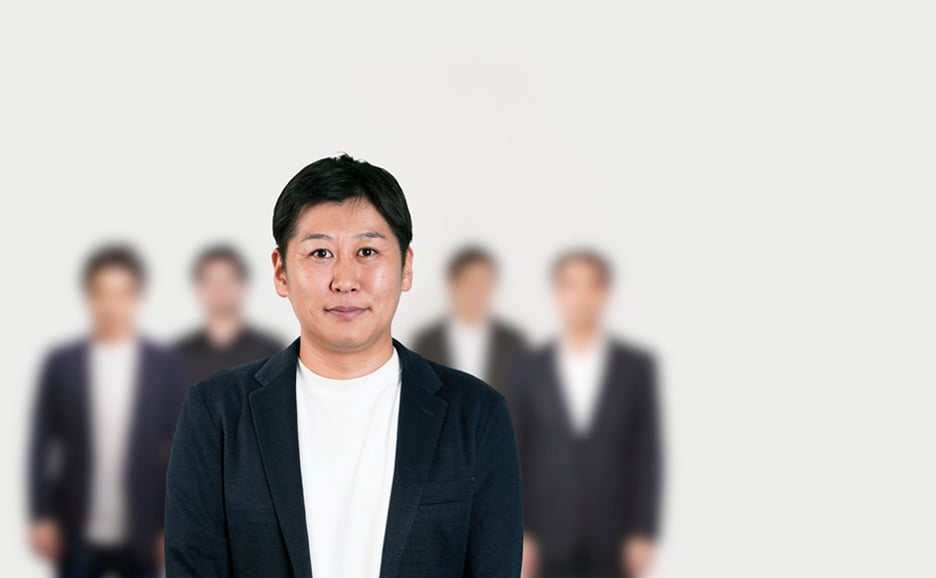
Seeking answers at the intersection of physical science and business is Yoshihiko Inaoka, who leads the mobile product business at 1Finity, part of the Fujitsu Group. His mission is clear: in a future where countless AI systems are at work, bring AI closer to people by deploying it at the edge, where action happens. Having spent his life asking “why”, Yoshihiko is now working to establish the connectivity infrastructure needed to support Trust in AI.
What is Trust in AI?
Trust in AI is an approach for building confidence in AI. It is built around five key elements: Explainable, Secure & Ethical, Sovereign, Sustainable, and Connected. Together, these elements help organizations adopt AI in ways that are responsible, transparent, and aligned with human values.
In ”People Shaping the Future of AI series", we explore the personal stories, motivations, and research journeys of the people working to make trusted AI a reality. This article highlights the Trust in AI elements, showing how one's work contributes to building AI that people, organizations, and society can trust.

From Experiments to Real-World Impact
Before asking what something is or how it works, Yoshihiko always returns to a more fundamental question: Why?
Born and raised in Hyogo Prefecture, Yoshihiko was the youngest of three children. As a boy, he immersed himself in soccer and set off on grand adventures in role-playing games. Math was not his favorite subject, but he loved science. Eventually, he left home to study physics at university and then at postgraduate school.
Physics can broadly be divided into two approaches: theoretical physics, which uses mathematical models to explain how the world works, and experimental physics, which tests those ideas through observation and practical experimentation. Yoshihiko chose the experimental path without hesitation.
“I was interested not only in theoretical calculations, but also in carrying out experiments, understanding what the results meant, and thinking about how they could ultimately be put to use in society.”
His habit of returning to first principles and continuing to ask questions until he was satisfied with the answer took shape during his years in the laboratory. Over time, his desire to turn academic knowledge into practical value grew stronger.
Boundless Curiosity, a Breakthrough, and a Move to the United States

In 2008, Yoshihiko joined Fujitsu. His first assignment was as a systems engineer in a network division, a field far removed from what he had studied. Rather than feeling unsettled by the change, he approached the unfamiliar field with his characteristic curiosity.
“Servers, CPUs, memory, storage. Even a system that looks complex can be broken down into components, each with its own role. An ecosystem is made up of multiple servers and switches. The approach was the same: keep asking why each element is necessary.”
That boundless curiosity would soon lead to a significant breakthrough.
In 2012, Yoshihiko was building a large-scale processing system for vast volumes of communications data. At the time, the customer used a conventional relational database (RDB), which organizes data in tables, to search through an enormous body of information. Drawing on emerging technologies, Yoshihiko and his team built a system that distributed the data across multiple servers and processed it in parallel. A search that had previously taken 30 minutes could now be completed in under five seconds.
The result generated excitement across the project. Yet the experience left Yoshihiko with another question.
“With the conventional approach, it was relatively easy to see how the data had been processed. Large-scale distributed data processing was much faster, but I did not yet fully understand the logic behind the result. Part of that was simply because technology was unfamiliar to me, but at the time, it felt slightly strange.”
That experience shaped the way he began to think about infrastructure.
“Turn on a tap and water comes out. We do not question whether it will flow or whether the water is safe. In the world of AI, however, opaque logic can create a lack of trust. It is essential to build infrastructure that does not leave people with that uncertainty.”
With that belief in mind, Yoshihiko moved to Dallas, Texas, in 2019. For the first three months, he quietly went about his life while avoiding conversations in English. Then he realized that this was defeating the purpose of being there. He began initiating conversations, sharing meals and drinks with colleagues, and spending time with them outside of work.
After completing a one-year training assignment, he transitioned to a formal expatriate role in his second year. Before long, he was delivering presentations with confidence.
What began as a temporary move ultimately became seven years in the United States. In the spring of 2026, Yoshihiko returned to Japan with a broader global perspective, greater confidence in negotiations and an even deeper sense of curiosity shaped by his time in Dallas.
AI-native vRAN: Bringing AI and Networks Together
Today, Yoshihiko is focused on bringing AI-native vRAN, a new approach that combines AI with radio access network technology, into real-world use in North America. At its core, AI-native vRAN transforms network infrastructure into a distributed computing platform that can provide both wireless connectivity and AI processing closer to where decisions need to be made.
Why does this matter? As Physical AI applications become more common, organizations need AI systems that can respond instantly to events in the real world. By processing data at the network edge, AI-native vRAN can reduce latency, improve efficiency, and support real-time decision-making.
For Yoshihiko, its true value lies in enabling communications and AI to work together seamlessly. Instead of treating networks as passive infrastructure, AI-native vRAN allows computing and network resources to be allocated dynamically in response to changing conditions and priorities.
Imagine an autonomous robot patrolling a factory. Under normal conditions, it sends lower-resolution images to avoid consuming unnecessary bandwidth. But the moment it detects something unusual, such as a fire or an intruder, the network can automatically prioritize the bandwidth needed to transmit high-quality video immediately. Using these clearer images, AI at the edge can assess the situation in real time and send the appropriate instructions back to the site.
“In the era of Physical AI, networks can no longer simply carry data,” Yoshihiko explains. “They must be able to understand what matters most at any given moment and act accordingly. What we are building is an intelligent network that can manage itself and help AI operate safely and effectively in the real world.”

Building Trusted Connectivity for the Physical AI Era
Putting AI-native vRAN into practice requires collaboration with a broad range of stakeholders in Japan and around the world, including communications service providers and application vendors. Although an engineer by background, Yoshihiko also works directly with stakeholders, leading negotiations and coordinating technical specifications. In that sense, he is helping to shape the wider ecosystem by listening to different perspectives, bringing together diverse expertise and continually searching for the best answer.
Yoshihiko’s work is closely aligned with the “Connected” element of Trust in AI. In this context, connectivity means more than linking devices to a network. It means enabling different AI systems and technologies to work together seamlessly, even when countless systems are operating simultaneously. It also means reducing inconsistencies and processing delays so that those systems can respond when and where they are needed. By freeing AI, including Physical AI, from the limitations of location and conventional communications infrastructure, an intelligent network creates a stronger foundation for trust.
“AI is, first and foremost, a partner for people. That is why it matters for Fujitsu to understand and build the full stack, from computing resources and networks to large language models, and to deliver trust consistently at every layer. What we provide is infrastructure that customers can rely on as they shape the future of their businesses.”
A childhood spent chasing a soccer ball with his brother. Student years spent exploring the first principles of physics at the laboratory bench. Years in Texas working to reshape the world’s communications infrastructure. Across every chapter, Yoshihiko has continued to ask “Why?” and “For what purpose?” Today, those same questions continue to guide his work, as he explores how connectivity can help create a future in which AI can be trusted.


Related Information
How Sovereignty Can Unlock AI Agent Collaboration

From questioning an unjust world to building ethical AI

Toshio Yoshida’s Vision of Trusted, Sustainable AI

