People Shaping the Future of AI seriesFrom questioning an unjust world to building ethical AI
Interview article | 2026-9-30

10 minute read
As AI becomes embedded across business and society, organizations face unprecedented risks. Systems designed to drive efficiency can unintentionally reinforce discrimination, deepen social divisions, and undermine the trust companies have built with customers, consumers, and markets. As these dilemmas become increasingly intertwined, how should we respond?
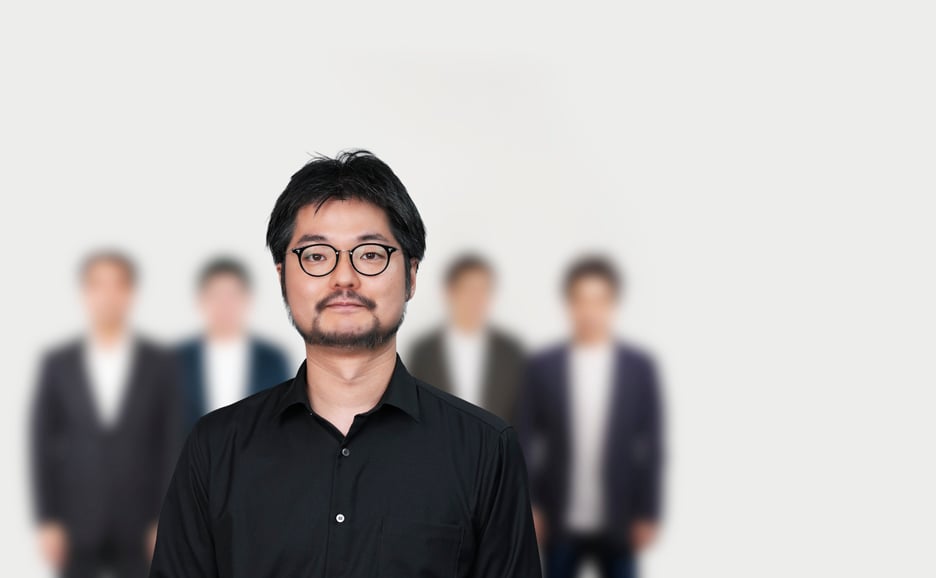
Among the researchers exploring these questions is Yuri Nakao of Fujitsu, whose work sits at the crossroads of technology, ethics, and society. His work focuses on a key element of Trust in AI: secure and ethical AI, and how it can respond to society’s evolving values.
What is Trust in AI?
Trust in AI is an approach for building confidence in AI. It is built around five key elements: Explainable, Secure & Ethical, Sovereign, Sustainable, and Connected. Together, these elements help organizations adopt AI in ways that are responsible, transparent, and aligned with human values.
In ”People Shaping the Future of AI series", we explore the personal stories, motivations, and research journeys of the people working to make trusted AI a reality. This article highlights the Trust in AI element of ”Secure and Ethical”, showing how one's work contributes to building AI that people, organizations, and society can trust.
An early lesson on human-centric AI

One of the first projects to shape Yuri’s approach to AI took him to Itoshima, Fukuoka, where Fujitsu was working with the city to encourage relocation and help sustain its local communities. At the time, Itoshima was facing population decline, with many people moving away from the area. To attract new residents and support future growth, the city needed a better way to communicate what made each neighborhood distinctive and appealing. The challenge was that this knowledge was tacit, rather than something AI could readily use. It existed largely in the experience, instincts, and local understanding of city officials and residents.
To make this tacit knowledge explicit and organize it, Yuri spent countless hours speaking with city officials and residents, listening to the stories and observations that shaped their understanding of each neighborhood. He then compared those insights with public data, using large maps to piece together the factors behind seemingly simple descriptions. A phrase such as “popular with families with children”, for example, might reflect the number of childcare facilities, the size of nearby parks, or the safety and visibility of school routes. By identifying those relationships, he was able to translate local knowledge into logic that AI could use. The result was the Relocation Matching System, which recommends suitable neighborhoods based on a few questions about a person’s lifestyle and preferences.
For Yuri, the project represented far more than a technical success. Long before AI became part of everyday conversation, he had seen how knowledge rooted in human experience could be transformed into technology that created real value for society. That experience stayed with him and would go on to shape the direction of his future research.
The roots: confronting an unjust world
Loading component...
Born in Kyoto, Yuri was a child who spent much of his time immersed in books. When he was five years old, he saw television news footage showing the realities of civil wars and famine. The images stayed with him, sparking questions that few adults around him seemed able to answer. “Why do people go to war?” “Why are there children with swollen stomachs when there is no food?”
Yuri was struck by the suffering and unfairness he saw in the world. That early sense of indignation, combined with a deep empathy for others, has remained a defining influence in his life and work.
Loading component...
Questioning what fairness means for AI
Loading component...
Loading component...
"The ideal future is something closer to hybrid intelligence, where humans and AI grow wiser together," he says. In that sense, Yuri’s research is not only about making AI more trustworthy. It is equally about cultivating the judgment and responsibility needed to use AI wisely.