
People Shaping the Future of AI seriesPriyanka Sharma: Building the ecosystem behind sovereign AI
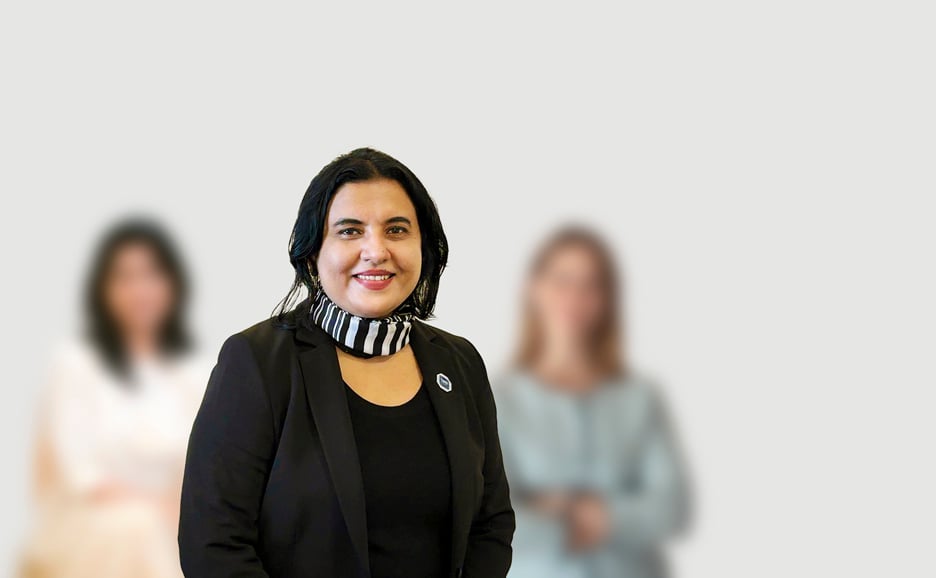
Interview Article | 2026-11-27

10 minute read
Priyanka Sharma’s journey spans from the world of artistic creativity to advanced computing technology and AI. Her childhood curiosity, which once found expression in writing poetry, composing music, and painting, has evolved into a passion for innovating advanced technology as a deep learning researcher, global technology leader and strong advocate for women in STEM. Priyanka Sharma’s journey is truly inspiring. Today, she is working towards democratizing AI by making advanced capabilities work with organizations’ existing infrastructure, software and tools, helping them adopt and expand their use of AI without starting from scratch.
Priyanka leads Fujitsu Research of India (FRIPL)’s MONAKA Software Research and Development Unit and is working on enabling and accelerating the AI software ecosystem around the FUJITSU-MONAKA Arm processor and associated servers. Her focus is not the chip in isolation, but the wider infrastructure and software that helps make FUJITSU-MONAKA a practical foundation for sovereign AI infrastructure. This connects her work with the sovereign pillar of Fujitsu’s Trust in AI approach: giving countries and organizations more choice in the AI technology and infrastructure they use, and greater control over how they develop and run AI.
What is Trust in AI?
Trust in AI is an approach for building confidence in AI. It is built around five key elements: Explainable, Secure & Ethical, Sovereign, Sustainable, and Connected. Together, these elements help organizations adopt AI in ways that are responsible, transparent, and aligned with human values.
In ”People Shaping the Future of AI series", we explore the personal stories, motivations, and research journeys of the people working to make trusted AI a reality. This article highlights the Trust in AI elements, showing how one's work contributes to building AI that people, organizations, and society can trust.

Balancing Sovereignty and Usability in Sovereign AI
Having more choice in AI infrastructure is only useful if it works with the technology organizations already rely on. For sovereign AI, that means building a software ecosystem around the Arm based hardware. Priyanka describes sovereignty as giving countries the capability to develop their own AI models, rather than relying solely on global models such as Claude or ChatGPT. Her team’s work on FUJITSU-MONAKA helps build the required software infrastructure to support that ambition.

What drew Priyanka to the challenge was FUJITSU-MONAKA’s combination of high-performance computing and significantly lower energy consumption - a combination that leads her to call it a “magical chip.” It gives organizations another infrastructure option as they balance performance, cost, sustainability, and control. FUJITSU-MONAKA is Arm based, a growing alternative for high-performance, energy-efficient computing. There is a practical barrier to this: most of the existing AI software ecosystems were designed for x86 systems, the technology underpinning conventional business servers. Priyanka’s task was to help make the open-source AI software ecosystem work effectively with FUJITSU-MONAKA, so software incompatibility would not prevent organizations from considering this as an alternative to x86 based datacenters.
This is where Priyanka’s team comes in. They enable and accelerate widely used AI frameworks, large language model tools and data platforms for FUJITSU-MONAKA. They also develop software for confidential computing, which works with protection built into the hardware to help organizations verify that sensitive workloads are secure. This strengthens the link between sovereignty and trust: greater control over AI infrastructure must also include confidence that data and workloads are protected through Confidential containers and Confidential Virtual Machines.
Open-source collaboration has been central to the task. Rather than creating a separate software environment for FUJITSU-MONAKA, the team contributes directly to established open-source software (OSS) projects, working with the people responsible for reviewing and approving OSS upstreaming. So far, over 140 OSS contributions have been accepted across over 20 AI frameworks, alongside work to accelerate over 10 OSS Data Platforms. This means organizations can use familiar, widely supported software rather than relying on tools created specifically for FUJITSU-MONAKA. “Pushing these changes in open source, it’s not easy,” she explains. It's a complex ecosystem dealing with various global stakeholders working as code maintainers of the AI framework and data platform ecosystem. We need to be extremely fast, forward-looking, globally connected, and innovative.
For Priyanka, success means that the fast-paced technological revolution and evolution no longer get in the way of AI accessibility. Someone running a complex language model, she says, “will not even know that this is not x86 and this is Arm processor in the AI infrastructure.” They can continue using familiar software and focus on the outcome they want to achieve.
From curiosity to real-world problems
Priyanka’s instinct to look at the bigger picture began long before her career in technology. As a child growing up in a small town in India, she had more of an artistic and creative mindset. She fondly remembers that even when she made drawings as a child, she rarely drew a single object in isolation. She created complete scenes, thinking about how each part connected with the next. “Since childhood, I’ve liked this systemic way of looking at things. Seeing them, end-to-end, right from ideation to seeing it in action towards value creation is something I have been passionate about,” she says.
One of Priyanka’s greatest inspirations for her work came from her father. He was a globally reputed nuclear scientist and core researcher who contributed to plasma physics research globally, including setting up India’s first plasma reactor (TOKOMAK). He encouraged her to use her artistic creativity toward generating innovations in science and mathematics. Priyanka fondly remembers that, when she once asked him for a quick answer to a school physics problem, he handed her three volumes of Richard Feynman’s lectures in physics and told her to study the relevant chapters from Volume I and II. His advice was consistent: “nothing worth having comes easy”, “ask questions, don’t always accept things at face value” and “learn to fight your own battles.”
The other inspirational aspect Priyanka remembers is her first visit to Japan in 2023 to see the “Fujitsu Technology journey” at the Fujitsu Numazu factory. Standing next to Fujitsu's first Relay Computer, she felt very blessed to have an opportunity to contribute to the development of the FUJITSU-MONAKA software stack.

That independence encouraged by her father and passion to contribute towards next-gen computing technology shaped a career that developed into a passion for high-performance computing, AI Infrastructure development and deep learning. She went on to apply deep learning to scientific and inter-disciplinary problems, including predicting major disruptions in Plasma reactors, identifying brain cancer cell types through 3D volumetric segmentation, supporting AI based enablement of drug discovery pipelines and improving global supply chain logistics. Priyanka is a voracious reader, and during the COVID pandemic, while reading a long list of books on the human mind and AI, her interest in the connections between the human mind, collective behavior, and deep neural networks (DNNs) deepened further. “I developed this passion of connecting machine learning with the human mind way back in 2020,” she says.
Working across such different fields taught her to consider the complete environment around technology: who will use it, what other systems it must work with, and what outcome it needs to support. “You cannot just develop a deep learning model without understanding the overall system it can be used in,” she explains. The same perspective now guides the OSS-based software ecosystem she is building around FUJITSU-MONAKA.
Why “so what?” matters in research
The inspiration from her father goes beyond research; it also influences the type of leader Priyanka is today. She continues to ask questions. For example, when one of her team members tells her that an optimization has doubled performance, she asks: “So what?” The question is not intended to diminish the technical achievement, but to uncover its purpose. Where will it be used? What problem will it solve? What value will it create? She encourages them to look at the bigger picture.
“When you have to be a mentor to your team, you try to cultivate that culture of innovation, the culture of seeing value in the research you are doing,” she explains. She also believes in being a leader who can inspire people. Because being able to inspire also needs a lot of self-work and self-learning. This matters in work spanning India, Japan and global open-source communities, where progress depends on people being willing to express a view, challenge an assumption and collaborate across organizational boundaries.

Priyanka is particularly conscious of this as a Technology Leader collaborating to build the global OSS ecosystem for FUJITSU-MONAKA. Her own confidence and passion for collaboration developed gradually. When she was an 11-year-old child, her father encouraged her to speak at school assemblies even when her hands shook and she was uncomfortable speaking English. “This art of public speaking in my early childhood has been quite instrumental,” she says. She is also a strong advocate of Women in STEM in India and used to work on multiple National Forum initiatives and policy discussions to encourage more women in STEM and AI.

She is also currently a governing body member of IWA - Indian National Science Academy. She says that the global AI ecosystem needs equal representation of diverse populations to develop a decision support system that is ethically unbiased. Today, she encourages women in her team to voice their ideas clearly and seeks out opportunities for them to develop their confidence as emerging leaders.
Bringing the FUJITSU-MONAKA Software Foundation into Practice
As FUJITSU-MONAKA moves toward commercial availability, Priyanka’s focus is shifting from building the foundation of AI Framework Engineering to seeing how those foundations perform in practice. The next stage will include further benchmarking, customer demonstrations and proofs of concept, as organizations explore how FUJITSU-MONAKA could support emerging applications such as sovereign AI and Agentic AI. For Priyanka, it is an opportunity to see years of behind-the-scenes ecosystem work begin to create real choices for the people building and using AI globally.
It is also a chance to inspire others. The child who was taught to find her own answers to complex problems of the physical world now hopes to encourage more researchers and software engineers to remain curious about recent changes in technology and be equally passionate about adapting faster to help shape what comes next. The future is in our hands, because we are all part of the future.
Related Information
Virginia Ghiara: Designing AI that empowers people

How Sovereignty Can Unlock AI Agent Collaboration

From questioning an unjust world to building ethical AI

